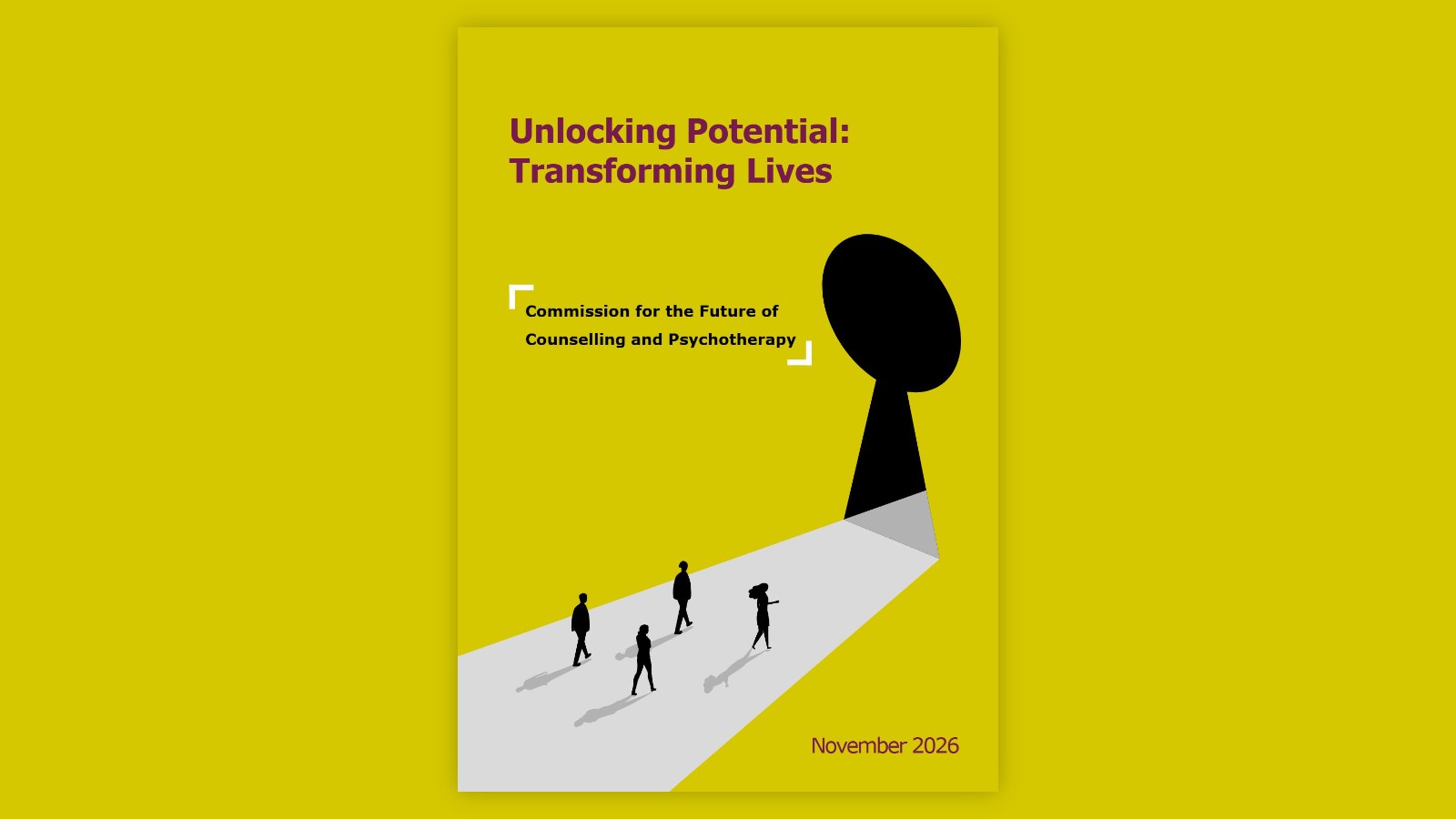
On 2 November 2026 I represented BADth at the launch of Unlocking Potential: Transforming Lives, the report of the Commission for the Future of Counselling and Psychotherapy, at One Great George Street in Westminster.
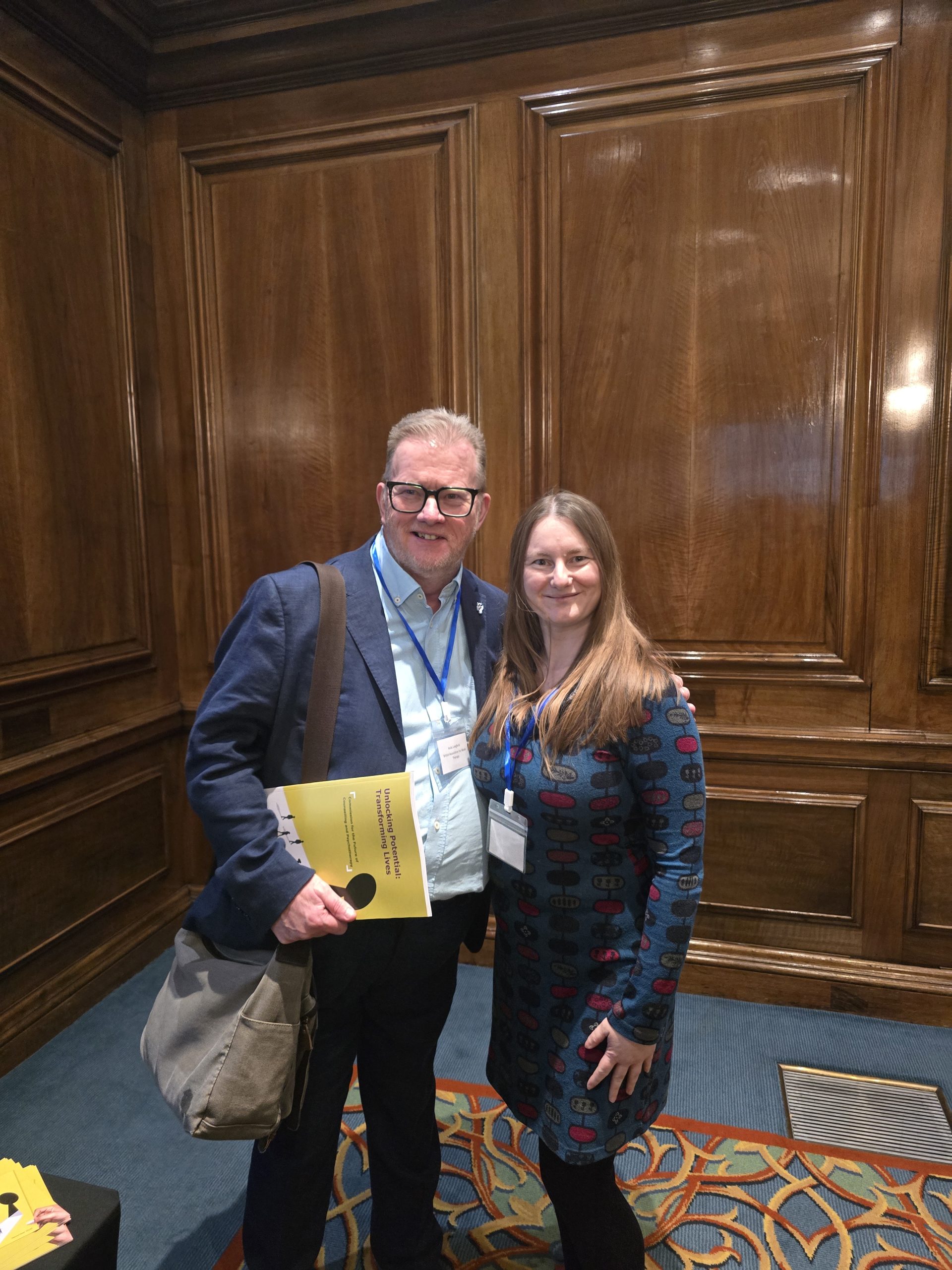
It was a great opportunity to network, I am pictured here with Andrew Landford, the CEO of the British Association of Music Therapy. It was also good to talk to Adrian Whittington, National Clinical Lead for Psychological Professions in NHS England who asked me about the postcode lottery facing dramatherapists and with Matthew Smith-Lilley, Policy Lead for BACP who spoke about the talk therapies exploring state regulation, as dramatherapists already are with HCPC
The event itself was inspiring, a lot of work had gone into this comprehensive report which I hope will improve the mental health field for all.
About the Commission
The Commission was set up in October 2025 by the Partnership of Counselling and Psychotherapy Bodies (PCPB), six professional bodies whose accredited registers hold around 82,000 therapists. Co-chaired by Phil Hope and Andrea Sutcliffe CBE, it brought together people from the professions, academia, the wider health sector and people with lived experience, held themed evidence sessions and received written evidence from around 4,000 people and organisations.
What it found
- The treatment gap is large and growing. An estimated 1.8 million people are on a waiting list for mental health services in England, and the Mental Health Foundation puts mental health need across the UK at just under 14 million people.
- Much of the workforce needed already exists. More than three-quarters of therapists who answered the Commission’s call for evidence wanted more paid client work. The Commission estimates this unused capacity at over 370,000 extra therapy hours a week, without training anyone new.
- A small investment would go a long way. Using just 10% of that capacity could support more than 150,000 more people a year, for less than 1% of current national mental health budgets (around £102.5m in England, £10.4m in Scotland, £5.7m in Wales and £3.4m in Northern Ireland).
- It pays back. The report cites evidence that every £1 spent on counselling for children and young people could return £14, and every £1 on workplace counselling around £5.
- Provision is fragmented. Short-term, local commissioning, reliance on unpaid work and volunteering, and the absence of workforce planning all mean people’s access depends on where they live.
What the Commission recommends
Across the UK, it calls on governments to make far better use of the existing therapy workforce; on commissioners to fund services over longer cycles and end unfunded referrals; and on the professions to widen diversity, modernise training (including neurodiversity, trauma, suicide and self-injury, severe mental illness and cultural competency), build the economic and real-world evidence base, raise public understanding and speak with a stronger collective voice. There are separate recommendations for each nation.
What it means for dramatherapy
Dramatherapists are HCPC-registered psychological therapists and allied health professionals, so parts of this report are not about us. But its central argument is ours too: the UK has skilled therapists it is not using, and people are waiting.
- Choice matters. The report describes a cycle in which short, manualised therapies are commissioned because they are easy to measure, then evaluated because they are commissioned, and so appear better evidenced. Arts therapies are caught in the same cycle. The Commission welcomes the 2022 NICE depression guideline, which widened the first-line therapies people can be offered.
- Not everyone can use talking alone. The Commission found that the most complex needs are often routed through services designed for mild to moderate difficulties. Dramatherapy offers another way in, through story, role, image and play.
- Smaller professions are invisible in the data. The report shows how hard it is to plan a workforce nobody counts. The same is true of the arts therapies, and BADth is pressing for better workforce data in all four nations.
- The training pipeline is fragile. Unpaid placements, self-funded training and insecure first jobs are familiar to dramatherapists too.
What the report says for your area
We have pulled out what the report says that matters for each nation and sector: Scotland, Wales, Northern Ireland, the NHS, neighbourhood health, schools, colleges and universities, research and evidence and the justice system.
Amy Mackay
Chair of Executive Directors
Source: Commission for the Future of Counselling and Psychotherapy, Unlocking Potential: Transforming Lives (Partnership of Counselling and Psychotherapy Bodies, November 2026). Figures are the Commission’s, and the sources it cites, as published in November 2026.